(for bass clarinet and piano)
Over the last few years, I have found myself gravitating towards impressionism in music, composing works somewhat stylistically similar to composers such as Debussy and Ravel. One of the nice things about 20th century music is very few of the individual artistic movements were never fully explored by their makers, so, as a meditation on the intersection composers such as Debussy and Ravel and the painter Claude Monet, I have set out to write a work for bass clarinet and piano inspired by four of Monet’s works depicting the sea and its many characters along the European coastline.
Writing for bass clarinet is an interesting sandbox in which to play. While many composers for bass clarinet write works that test the instrument’s capabilities and push the boundaries of the techniques required to do it, there is now an enormous gap in music for bass clarinet that deliberately does not use extended techniques, that requires its performer instead to exercise their subtlety and their sensitivity in its performance. There are also exceptionally few works specifically for bass clarinet that are built like classical sonatas, such as those for clarinet of Brahms, Saint-Saëns, and Weber. The aptly named Sonata for Bass Clarinet and Piano will be a 25-30 minute work that aims to fill these gaps in the 21st century repertoire for the bass clarinet, separated into four movements inspired by the following of Monet’s works.
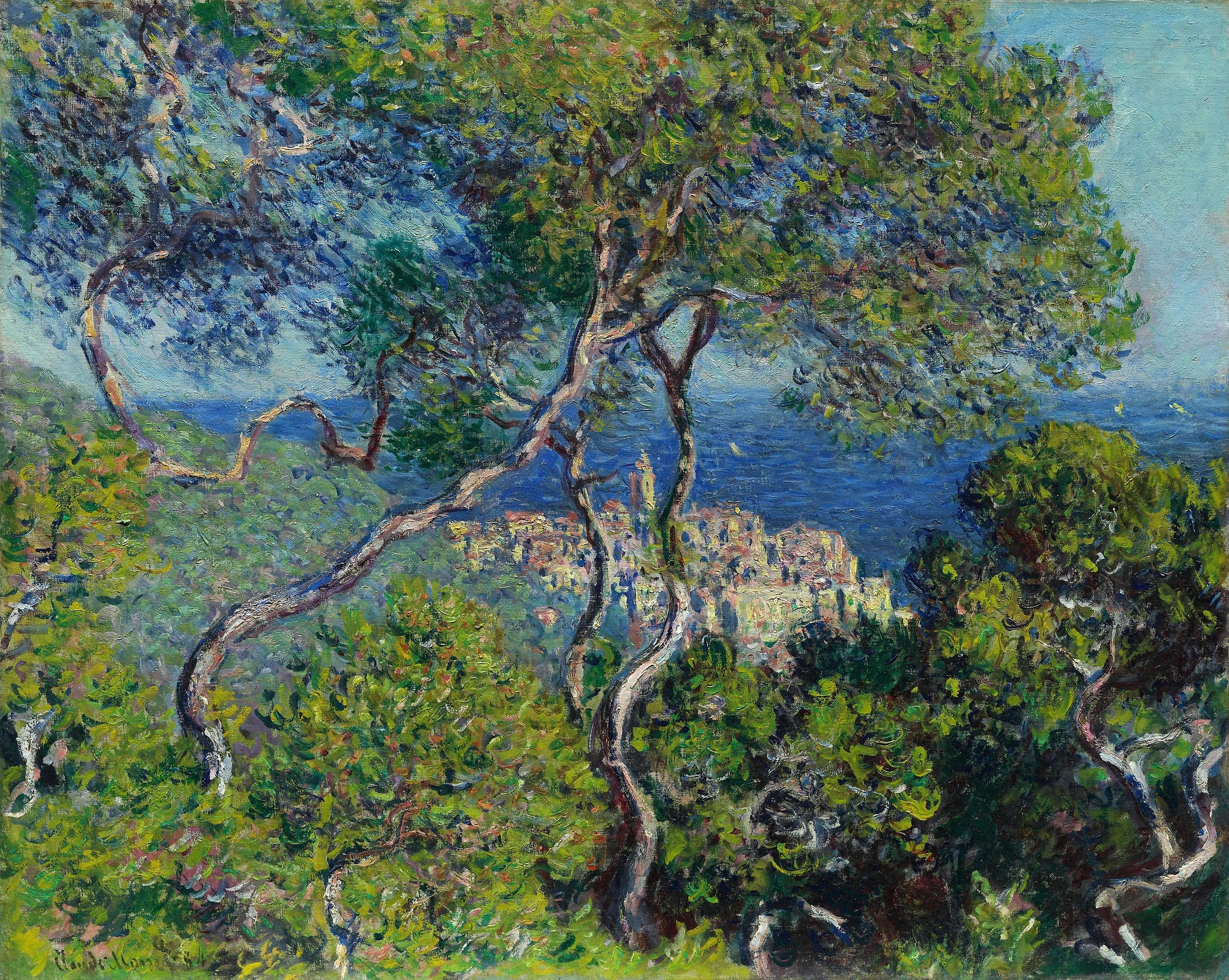
1. Bordighera (1884)
8-10 minutes
The first movement of Sonata for Bass Clarinet and Piano will be a rhapsodic stroll along the streets of Bordighera, Italy. Monet spent a summer there painting the village and its surrounding area along the Mediterranean.
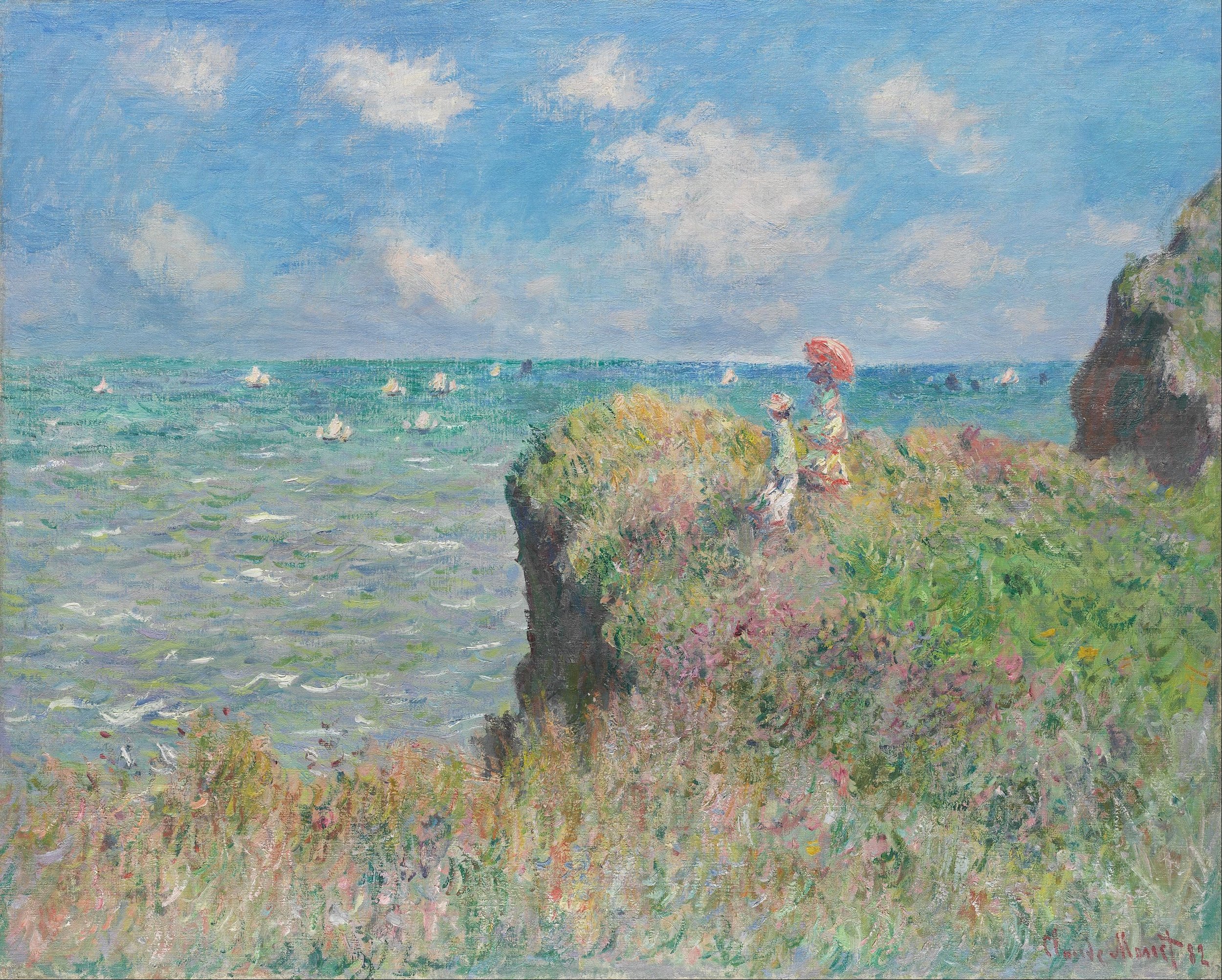
2. cliff walk at pourville (1882)
4-6 minutes
Inspired by perhaps one of Monet’s most well-known paintings, the second movement will be a ballad that allows the pianist to imitate gusts of wind upon a peaceful bluff overlooking the English Channel facing north.
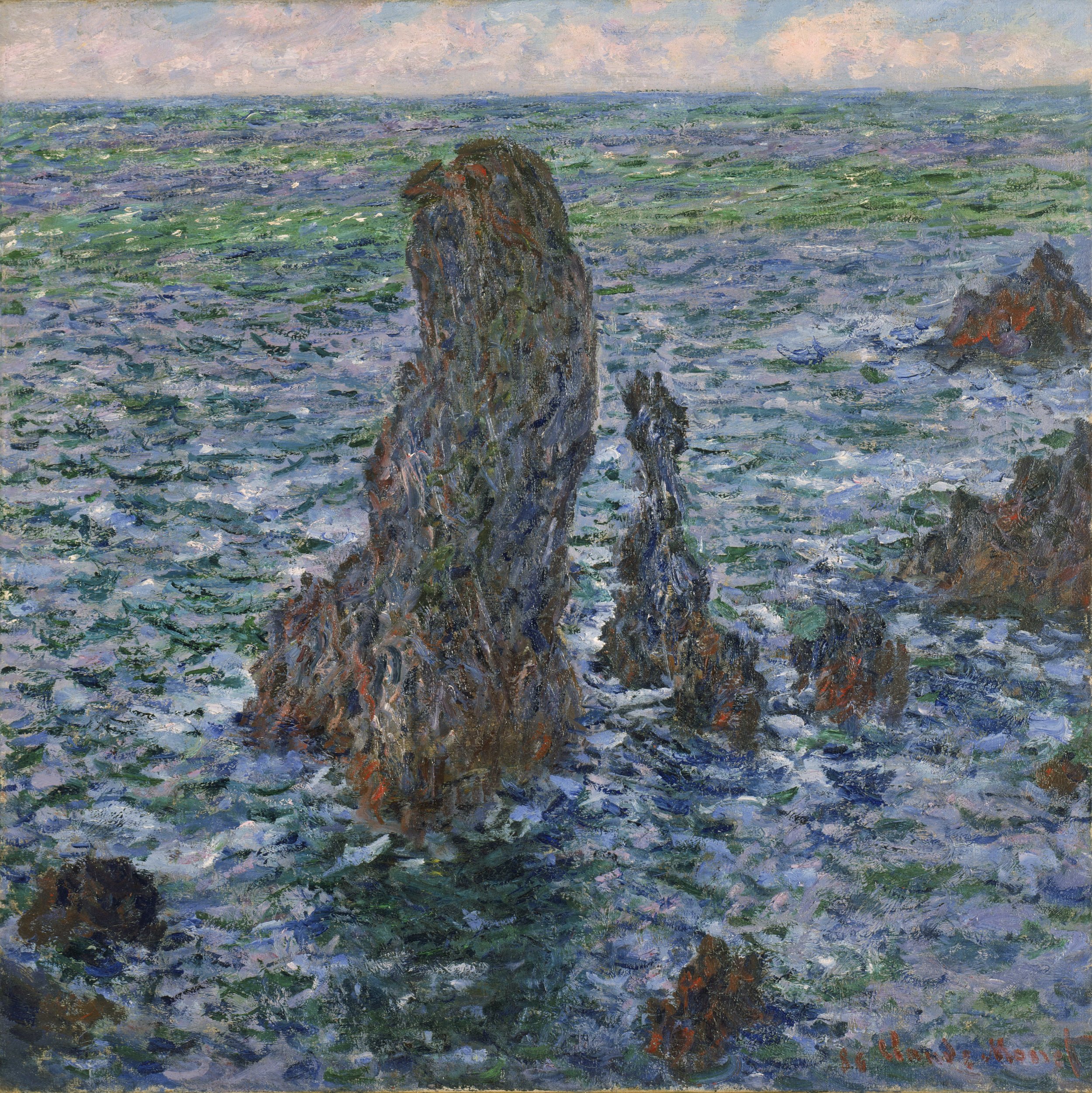
3. the pyramides at port-coton (1886)
3-5 minutes
A fierce and ferocious scherzo imitating the Atlantic crashing and swirling against sharp rocks, the third movement will capture Monet’s commitment to working through the harshest elements to create some of his most darkly animated works.
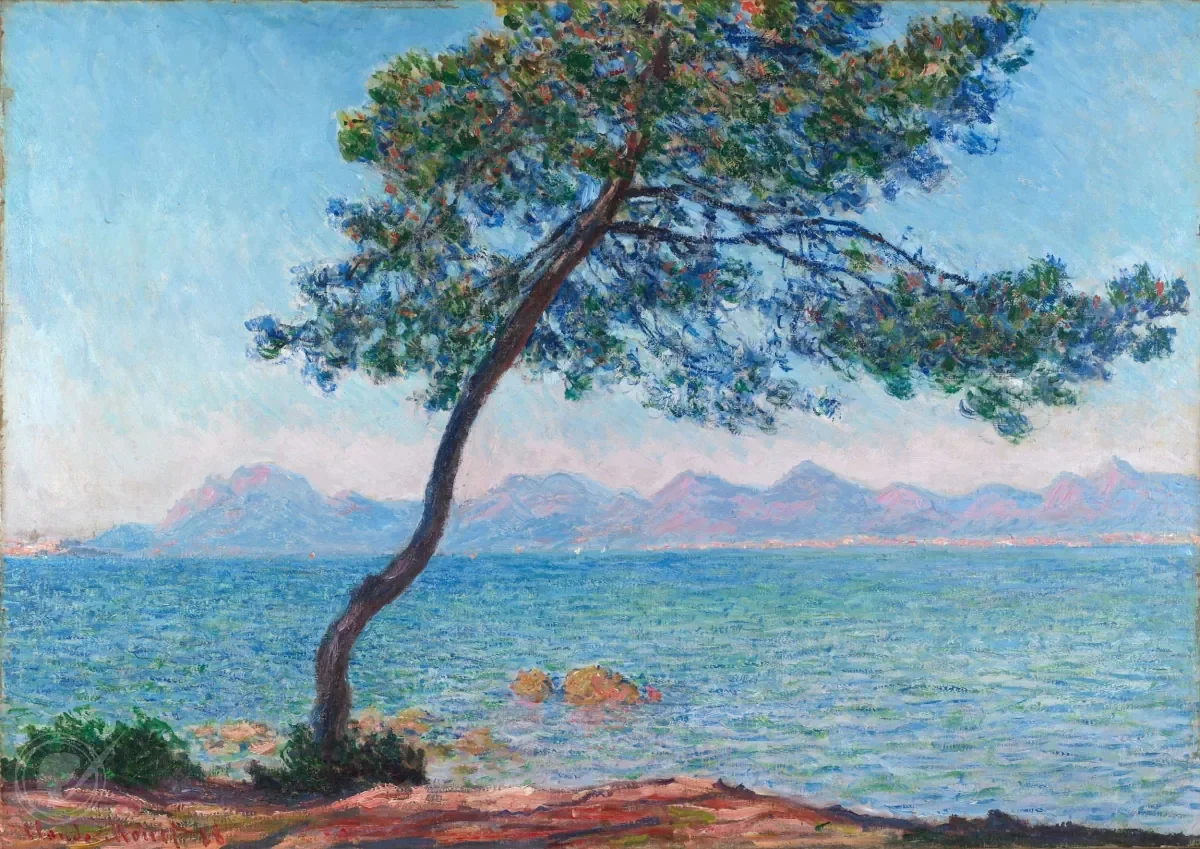
4. the mountains at esterel (1888)
7-8 minutes
The final movement will be true sonata, its form derived from the classical Sonata-Allegro. Upon brainstorming this project, it occurred to me that I had never actually written a Sonata-Allegro, and I wanted to take this opportunity to explore the form with one of Monet’s brightest works as inspiration.
consortium leader
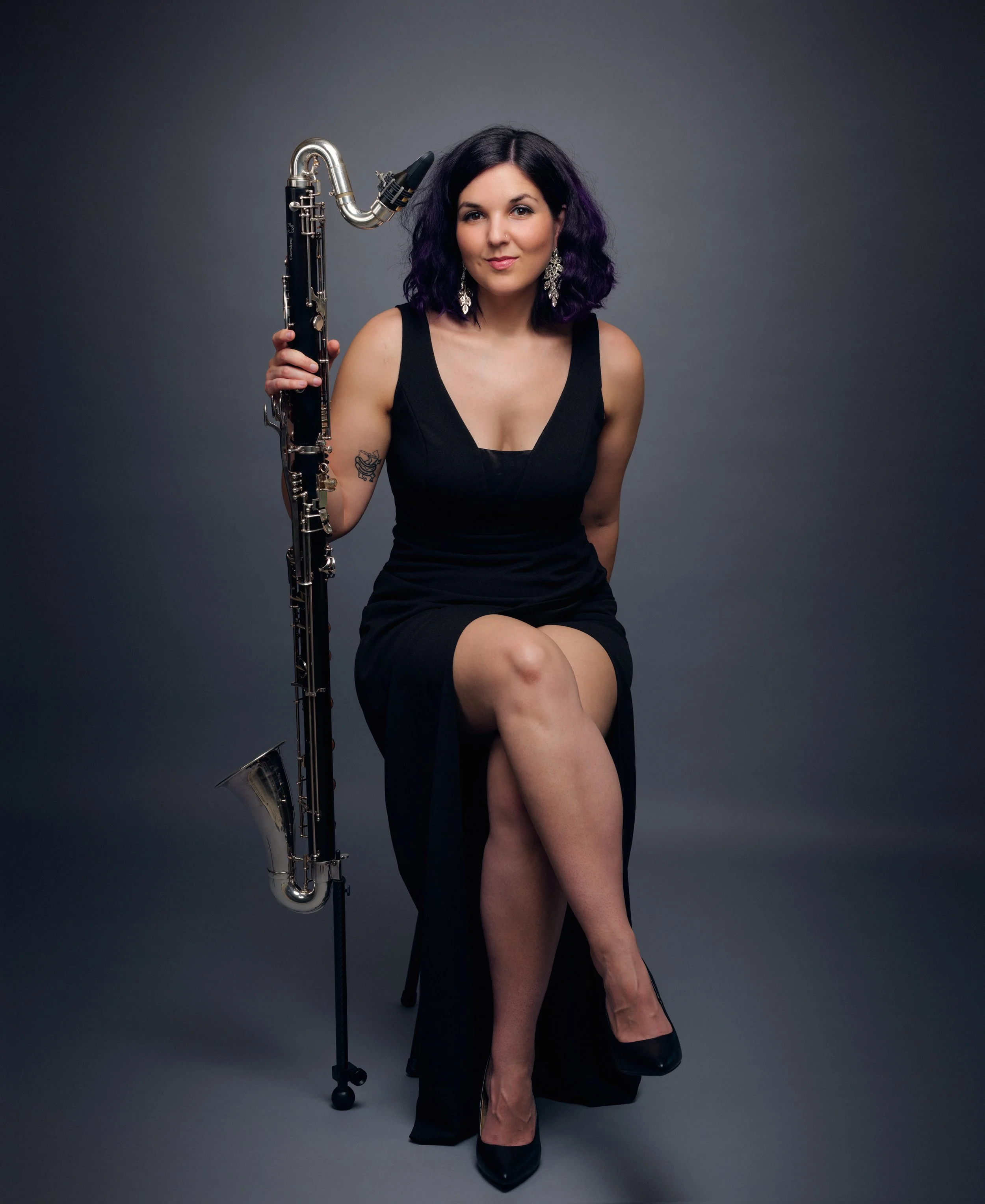
Stefanie Harger Gardner is an acclaimed clarinetist, educator, and advocate for new music and inclusivity in the arts. She serves as Music Program Director at Glendale Community College, where she leads Team Lo-Blow, the world’s largest active low clarinet choir. Formerly on the clarinet faculty at Northern Arizona University, Gardner has built an international reputation as a performer, leader, and champion of contemporary music.
Recognized among “ 100 Famous Female Clarinetists Throughout History,” Gardner maintains a vibrant performance career with Arizona Opera, the Phoenix Symphony, AZ MusicFest, the internationally celebrated Paradise Winds, and the award-winning Égide Duo, whose mission is to commission and perform works that inspire social change. Her cross-genre collaborations include performances with Jason Alexander, Pitbull, Ceelo, Danny Elfman, Tony Orlando, Reba McEntire, Michael Bolton, David and Katherine McPhee Foster, Jordin Sparks, “ Weird Al” Yankovic, Hanson, and The Who. Her chamber recordings on the Soundset label are available on iTunes, Spotify, and YouTube, and she has commissioned or premiered more than 100 new works for clarinet and bass clarinet.
Gardner has performed at major international conferences including the International Clarinet Association, International Double Reed Society, North American Saxophone Alliance, International Tuba and Euphonium Conference, National Flute Association, and the International Viola Society. Recent engagements include performances at the Calefax Reed Quintet Festival in the Netherlands, Clarinets on Stage in Ghent, Belgium, the European Clarinet Congress in Salerno, Italy, with additional guest artist residencies across the United Kingdom, Cyprus, Italy, Austria, and Mexico. During the summers, she serves on the faculty of the San Francisco Conservatory Bass Clarinet Intensive, the Musician Enrichment Foundation, and the Henri Selmer Paris Academy.
A visionary leader in the clarinet community, Gardner founded the ICA Low Clarinet Festival and the ICA New Music Weekend during her tenure as Chair of the International Clarinet Association New Music Committee. She most recently chaired the ICA Diversity, Equity, Inclusion, and Access Committee, furthering her dedication to creating a clarinet community that celebrates diversity and fosters belonging (see clarEquality.com).
An accomplished researcher and pedagogue, Gardner earned first prize in the ICA Research Competition for her groundbreaking study “ An Investigation of Finger Motion and Hand Posture during Clarinet Performance,” conducted in collaboration with the Center for Cognitive Ubiquitous Computing at Arizona State University using CyberGloves® technology.
Her recent honors include recognition as a 2025 GRAMMY Music Educator Quarterfinalist, inclusion among Musical America’s Top 30 Professionals, and receiving Arizona State University’s “ Outstanding Contributions in Private Teaching” award. She also serves as a reviewer for W.W. Norton music theory and aural skills textbooks.
Gardner holds Bachelor’s, Master’s, and Doctor of Musical Arts degrees in Clarinet Performance from Arizona State University, where she studied with Robert Spring. She is a Henri Selmer Paris/Conn-Selmer Performing Artist, a Silverstein Pro Team Artist, and a Gleichweit Performing Artist.
Dr. Gardner will be leading the consortium for Sonata for Bass Clarinet and Piano and giving the work its premiere in early 2027.
score sample and midi realization
Here is a small proof-of-concept sketch for the first movement of Sonata for Bass Clarinet and Piano.
MIDI realization excerpt from the first movement of Sonata for Bass Clarinet and Piano. © 2026 Acid Ink Music Press. All Rights Reserved.
consortium
The consortium membership for Sonata for Bass Clarinet and Piano is currently open. Each member of the consortium will receive a digital copy of the score, recognition in the front matter and the score’s dedication, a thank you note from the composer, and a virtual group Q/A session/launch party with the composer upon the work’s completion.
This work will require an instrument with a Low C extension and will require limited altissimo.
professional: $100.00 (USD)
student: $50.00 (usd)
As part of the consortium contract for Sonata for Bass Clarinet and Piano, consortium members joining at the student rate will be required to submit a picture of a current valid student ID from their education institution.
Sonata for Bass Clarinet and Piano will be completed and distributed to the consortium membership on or before November 1, 2026.
Sonata for Bass Clarinet and Piano is under consortium exclusivity until March 1, 2028.